Sunday, March 26, 2017

Week Nine


Although it's been two weeks, and spring break went by too fast, it's good to be back here on the blog! This past week in marketing, we talked a great deal about pricing, as well as structuring our survey for our smart project!

Tuesday was a great opportunity for each group to meet with our professor and talk about the survey we each had developed for our project. For my group in particular, this meeting really opened our eyes to designing our survey in an effective way. It helped us to come up with questions that would give us the information we really wanted, rather than just yes or no answers. Below are some of the changes we made:


  1. Instead of jumping right into questions about organization, we are now starting by having our subjects describe what they do when they enter and leave their rooms.
  2. Do you hang your keys up? → Do you have a special place for your keys?
  3. How often do you lose your keys? → Do you lose your keys? How often?


These are just some of the changes that we made in order to improve our survey. As a group, we are now looking forward to asking people these questions, and many more, in order to gain insight about our market and where this product could potentially go!

Thursday's class was specifically structured around pricing. I enjoyed the way the class was set up because it made the time go by quickly and allowed us to apply the pricing techniques to the projects we are working on.

One topic that we talked about was pricing objectives. The three types of pricing objectives are shown below.
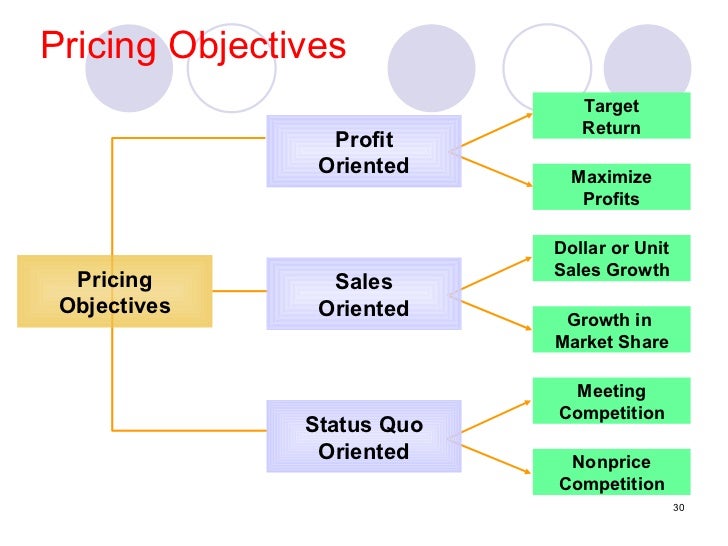

Image result for pricing objectives
My group decided that we would focus on a sales oriented pricing objective especially when our product was new to the market because it would help us to focus on getting our product out to as many people as possible. 

Image result for price penetration, price skimming, status quo pricingAdditionally, we talked about pricing strategies. These tend to go along with pricing objectives; however, they are different in the sense that a pricing strategy will help the organization reach their pricing objective. The pricing strategy that corresponds with a sales oriented objective is penetration pricing. This type of pricing sets the product price low at first in order to gain market share and may increase it over time. The other types of pricing strategies are shown to the left. Price skimming is a strategy that aligns with the profit objective because it allows for a company to set prices high in order to make money. Lastly, status quo pricing aligns easily with the status quo objective in order for an organization to meet their competition when it comes to prices and making money.

One other aspect of pricing my group thought about a great deal in relation to our product was discounts and price bundling. Price bundling occurs when the company packages two products together and offers a discounted rate. The example below shows this occurring with luggage. Clearly, the price to buy the two products together is lower than the price to buy them as separate entities. Unfortunately, my group decided there would not be a great way for us to use price bundling. We felt as though there was nothing we could sell our product with to make it more appealing and allow for a discounted rate.

Image result for price bundling

However, we decided that there were two types of discounts that could work well with our product. The first would be a bulk discount if we are selling directly to universities. In this way, if a university were to buy a certain amount of our product they would get a discount. For example if they buy 500-1000 they might get 5% off, if they buy 1000-1500 they might get 7.5% off and so forth. We also thought we might be able to offer a seasonal discount if we were selling directly to consumers. Therefore, if the product was bought right around the time the school year starts it might cost $25 but if it was bought in March it might cost $20. 

Some other pricing tactics that I found interesting this week that we did not discuss included:

  1. Single price tactic: pricing all goods and services at the same price (ex. dollar store)
  2. Flexible pricing: different customers pay different prices for same product
  3. Odd-Even pricing: when odd numbers are used to represent a bargain while even numbers represent quality (ex. $99.95 vs. $100)
  4. Leader pricing: pricing the product near or below cost with hope that the buyer will make other in-store purchases
Keeping it short and sweet this week! Until next time!!

-Kristen


Saturday, March 11, 2017

Week Eight


Crazy to believe we are already halfway through this semester! The past two months have flown by!! Over this past week, I've realized just how much I've learned about marketing so far. I'm excited to be able to put all of that together on one page in my mid-semester mind map. However, for the purposes of this post, I will focus just on what I learned over the last week.

On Tuesday our Smart Project groups had the opportunity to meet with our professor to discuss how our projects were going. I think the best part of this meeting was that our eyes were opened to some potential information sources we would not have thought of otherwise. For example, we were advised to talk to the head of facilities as well as public safety in order to learn about how many people actually get locked out of their rooms and if our product would be feasible for a university to purchase for students. We also were reminded to take a second look at our logo in order to make it eye catching and stand out to our consumers. Below is a picture of the current logo we are working on.
Additionally, during this class we were able to talk about our survey questions. Through this discussion we came up with many more potential questions to ask the people who will take our survey. This helped us to think about many different questions that might not be so obvious at first but could provide us with useful insight into how to make our product successful. Finally, we discussed our value proposition canvas. This relates the product to the consumer in order to eliminate the gap between the two. During our discussion with our professor, I realized just how important it would be to get the engineers involved in this process. Having them understand the way our customer will view the product will help them build the product to ensure it is well suited to their wants, needs, and fears. It also allowed us to think about certain features we may have forgotten as well as consider each aspect of the canvas from a different perspective. All in all, Tuesday's class helped our group progress in our project immensely.

On Thursday, we continued our discussion about products. However, this class focused on two major concepts, diffusion and innovation and product life cycles. To me, these are two of the most important concepts in marketing.

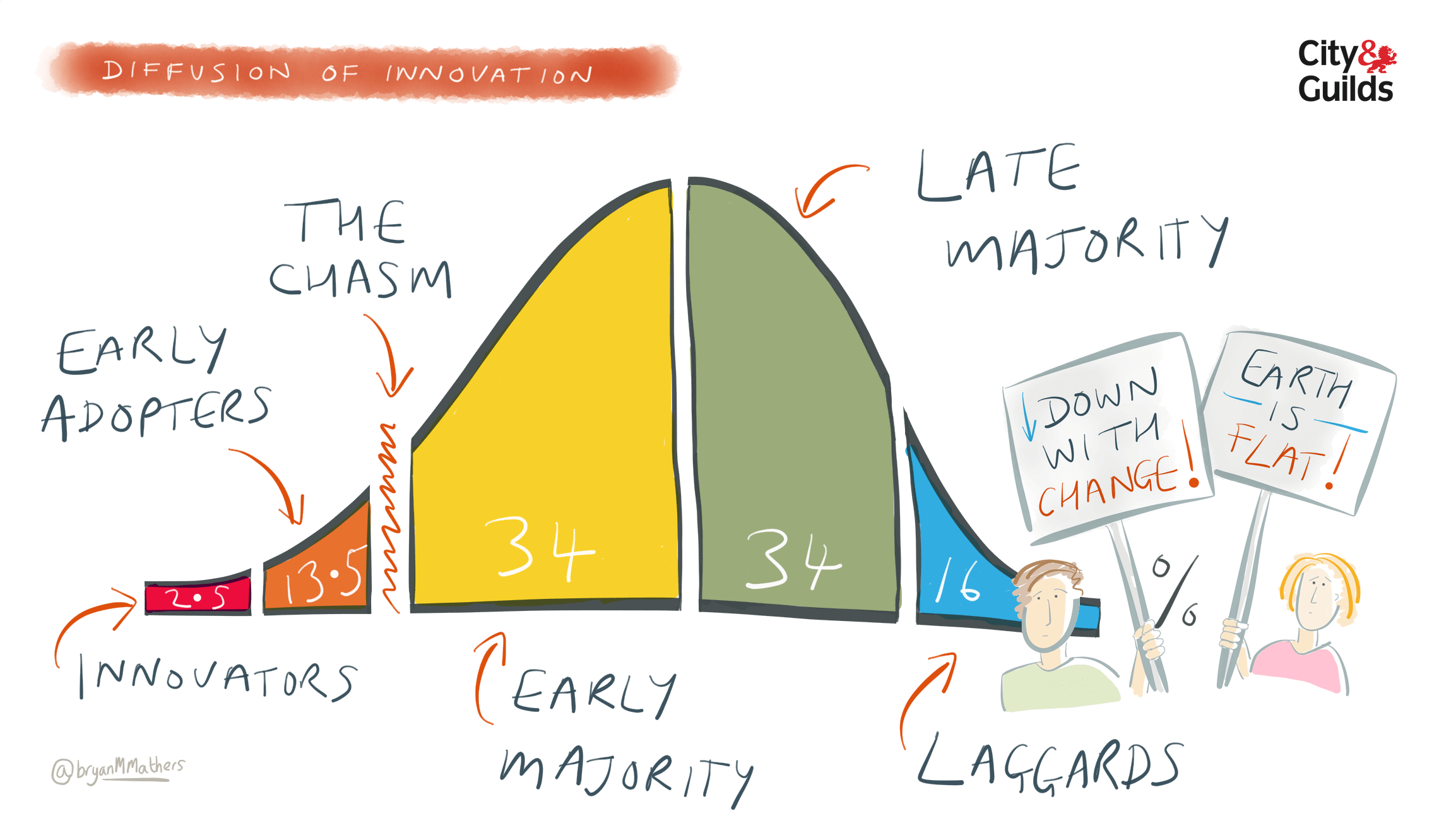
Image result for diffusion and innovationFirst, diffusion and innovation is all about how a product is introduced into the market. In other words, it is who buys the product over time until it is spread throughout the population of the market. The image to the left displays this theory. The innovators drive change, are adventurous, and are risk takers. They tend to buy a product because of the enjoyment they will get from it. Early adopters embrace change, are influencers, and are inspired by the newness of the product. They often buy a product because of the social acceptance it will give them. The early majority accept change, are practical, and go along with the world around them. They tend to buy a product because it will be useful to them. The late majority are skeptics, need proof of validity, and jump in. They often buy products out of necessity and only after others have it. Finally, laggards do not accept change, like tradition, and reluctantly join in. Often, they buy products because they have no other choice. The most important aspect of this theory is "the chasm". A product mucstget over the chasm, or get the early majority to start to purchase it, if it wants to succeed.

We were able to apply this theory to our Smart Projects by deciding what each group would be relative to our product. My group thought that high tech universities with a lot of money would be our innovators, our early adopters would be those who consider themselves influencial within the university world, and the early majority would be universities such as our own who see the practicality of the product. Our late majority would be more traditional universities with less money, while our laggards would be old school, classic universities who take pride in their rich history.

Image result for product life cycleThe other theory we talked about was the product life cycle. In general, all products follow the same life cycle. Right now, our products aren't even in the life cycle because they haven't been introduced or made yet, but they are in a "pre-introduction" stage. Introduction is when the product is first sold in the market. Often times, although sales are growing no profit is being made. The growth stage is when sales grow at an increasing rate, creating profits for the organization. The maturity stage is when sales still grow but at a decreasing rate. At this time, competitive or promotional pricing as well as intense advertising is often used in order for the organization to keep gaining money. The final stage is the decline stage. Sales begin to fall and competitors begin to take over.

What I found interesting in this discussion was that some products never quite reach the decline stage. One example discussed in class was the iPhone. The iPhone as a product may never decline, at least not in the time we can think about right now. Although certain versions of the iPhone have clearly reached, and surpassed, the decline stage (can anyone say iPhone 3G?!?!), the entire iPhone product most likely won't ever reach that stage. This brings up the distinction between a product and a product line which we talked about last week. Either way, it is important to recognize that not all products have the same exact life cycle, but that this idea can be used as a general outline for thinking about products within a market.

As I continue to learn more about marketing, I am looking forward to seeing the progress that has been made on our Smart Projects as a class. Additionally, I'm excited for the opportunity to connect what I've been learning to make a marketing plan for a product that has been on Shark Tank. Although I don't know what product I will be using yet, I can't wait to continue to apply what I've been learning in and out of class to such a unique assignment.

Here's to spring break!! I'll be back with more in two weeks!!

-Kristen

Saturday, March 4, 2017

Week Seven


As we get farther along into the semester, I am really starting to enjoy the way this class is making me learn. Instead of feeling like I am forced to memorize certain things for an exam, I am remembering the concepts that are most important, and that will help in the future. I enjoy the fact that I can take these concepts and put them in my "book shelf" in order to use them when I need to.

This past week our classes focused around products. Specifically, we focused on Gato Cafe, a cafe that would serve beverages as well as prepackaged foods to customers while also allowing them to play with cats in the seating area These cats could also be adopted by patrons of the facility. Gato Cafe was not yet a full-fledged business but was seeking the Sharks' investment in order to open their store.
Image result for gato cafe shark tank
Gato Cafe is a really great example to learn about products from. First, Gato Cafe can be considered a specialty product because the people who would go there and enjoy would most likely do a good amount of research about the establishment. Additionally, once they found they liked Gato Cafe they would most likely be reluctant to finding substitutes. Gato Cafe is a new product in the US, and specifically in Florida; however, similar types of cafes have been opening up around the world.

Something that we discussed in depth was product lines, mixes, and extenstions. Gato Cafe doesn't really have a product line, or similarly related items, but they do have a pretty large product mix if you consider all of the cats and food/beverages they will sell. A great product line extension for Gato Cafe would be to include dogs or create another cafe for dogs. This would diversify not only their product, but their customer base as well.

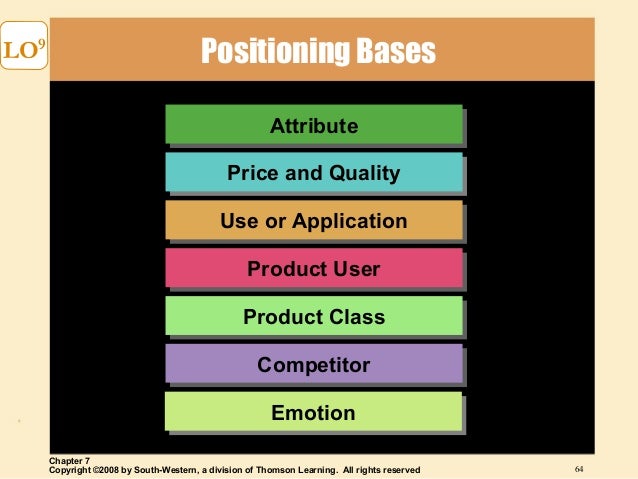
Image result for attribute, emotion, price, use,  product user, product class, competitorWe also talked about product positioning. There are many ways to position a product including those listed to the right. A great way for Gato Cafe to position themselves would be based on attribute. Their concept is something new to the market so they have something that nobody else currently offers. This is an attribute of their company in the sense that it distinguishes them from other cafes as well as other animal shelters or pet stores. By doing this, Gato Cafe will give themselves an advantage in the market. An example of product class positioning is Pepsi and Coke.

Additionally in class this week, we talked about co-branding. This is a concept that I find extremely valuable to a business, especially one that is just starting out. Co-branding is putting two or more brand names on a product. By doing this, a potentially lesser known brand could partner up with a well known brand in order to get their name out their. A really great example of this that we talked about in class was Gato Cafe partnering with Panera. I thought this would be a good way for Gato Cafe to bring in customers while it would help Panera because they might be able to reach an even more diverse group of people. This strategy would be mutually beneficial for both brands, thus making it a great thing for well established brands to do with a relatively new brand.

Understanding all of these aspects of a product, and many more, will ultimately help us improve our Smart Project. This is because, we will be able to put ourselves in the best position to succeed. For example, if we can determine what the best positioning base would be for our product, we can focus on that specific factor to distinguish our product from others rather than just claiming that ours is better. Additionally, by understanding our product as a concept, and potential line or mix of items, we can see the bigger picture of what effect it might have. Although the focus will still always be on our particular product, knowing it's potential in the future will help us make it the best it can be today in order to appeal to a wide range of people.


Image result for brandI think another major aspect of this project will be brand. Although we clearly will not become an established brand in the next two months, we can use the idea of a brand to help us produce the best product possible. What I mean by this is that what makes a good brand will also make a good product. We want our product to be identifiable. We want people to see our logo and know exactly what the product is and does. We want it to be something that people will remember because of the impact or impression that it made.

Along with meeting with our marketing consultant. This week gave my group a great deal of information we can use in order to develop our product effectively. Additionally, it has provided us with the insight we need in order to create and market a product that consumers will be interested in and would want to buy. From thinking about the type of product we are selling to how we should position the product to what questions a consumer might ask, we are ready to take the next step in the development of our product.

Here's to even more improvements next week!

-Kristen

Sunday, February 26, 2017

Week Six


This week's classes focused on the differences between Business to Business (B to B) and Business to Consumer (B to C) purchasing processes as well as market research. Both discussions were aided by the example of Phone Soap, a product pitched on Shark Tank that uses UV light to clean/sanitize a phone while charging it.
Image result for phone soap


On Tuesday we discussed the B to B and B to C buying processes. Part of the Shark Tank episode talked about whether this product belonged to the B to B market or the B to C market. The sharks were conflicted. However, I think it could fit in either market. Phone Soap would be a great product to sell to hospitals and other healthcare providers. Additionally, people who are very adamant about cleanliness or who care deeply about their phones would also be a great market for this product.

Although this is the case, the buying process would be much different. A consumer would probably just go into a store like Staples for another product, see Phone Soap as they were walking around, and decide to buy it before they leave the store. However, the process for a business to buy Phone Soap might be much more complicated. This is because someone would have to recognize the need for this product and then bring this need into the focus of administrators. After that, more research would have to be done about the product and how much they might need to order. Next, a purchasing agent would have to be notified and contact the accounting department to find out what account number to charge the purchase to. Then they'd have to purchase the items and accounting would have to pay for them when they arrive. Clearly, these two processes are extremely different.

However, in both situations, Phone Soap would be considered a new buy because the consumer or business has never used the product before and decided to purchase it either with or without much research or information. These products could become modified rebuys if a similar product is made by another company for cheaper or if upgrades are made by Phone Soap and the organization decides to purchase one of those products. Additionally, if the same product was purchased again in the future, they would be considered a straight rebuy.

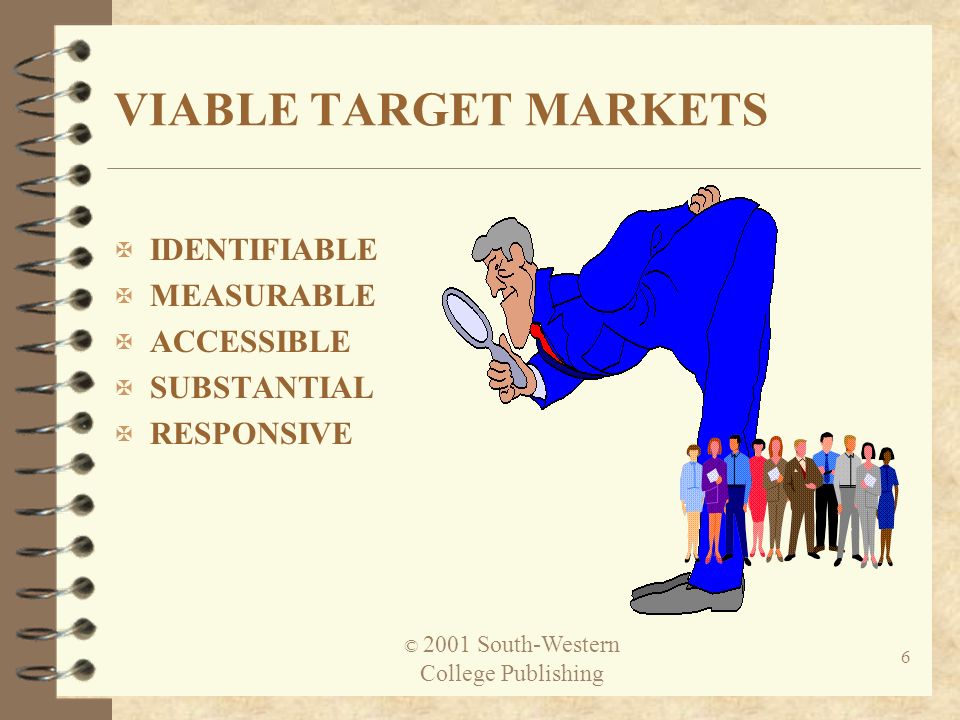
On Tuesday we also discussed market segment needs and business models. A good market segment is:

Image result for size, identifiable, accessible, responsive

There are two types of business models, volume and margin. A volume model focuses on selling to a lot of people who may not be willing to pay as much for a product. A company with this model is:

Image result for walmart
A margin model focuses on selling to less people that are willing to pay more for a good or service. A good example of a margin business model is the one carried out by:
Image result for nordstrom
Thursday's class focused on market research. In class we talked a lot about Phone Soap and the survey questions that each group came up with. Five key points I took away from our discussion of survey questions are listed below:

1. Put personal questions such as income, etc towards the end so if people decide not to answer them/get angry they have already filled out the rest of the survey.

2. Start with easier questions that don't require much thinking to get the survey taker gradually into the survey.

3. Try to avoid using "and" because it usually garners an unfinished response. Additionally it might cause confusion about what part of the question they are answering or if their answer applies to all aspects.

4. Don't be afraid to guide them along the way by providing ranges of answers or multiple choice.

5. Understand and define your audience or who will be taking the survey.

This week allowed me to look at our Smart Project in a much different way. By this I mean that it opened my eyes to thinking about things I would not have considered otherwise. For example, from the beginning I assumed our target market would be straight to college students, or consumers. However, there may be a very good potential market in selling to colleges/universities because they meet all of the viable market criteria and would get our product "in the doors" rather than waiting for a student to buy it. Additionally, I realized that we will need to do a lot more market research in order to understand exactly who our target market will be and the best way to go about selling to them.
Image result for forgetting keys

In general, this week has been extremely informative and helped me put what is written about in the book into perspective by applying it to real world situations such as Phone Soap.

Until next week!

-Kristen

Monday, February 20, 2017

Week Five

This past week in marketing was extremely productive in both working on the smart project and progressing our learning.

Tuesday's class focused on market segmentation. We were each given a different market segment and asked to draw up an ad to target our specific group. As discussed in my previous blog post, there are many different ways to segment a market including based on age, geography, income, gender, family life cycle, psychographic factors, etc. 

Image result for age segmentation
One aspect of segmentation that we discussed in class was the Affordable Care Act. This act requires people to have some type of health insurance and to pay a fine if they are not enrolled in any program. We discussed how students just out of college who don't necessarily need healthcare and can no longer stay on their parent's plans often opt out of this program. They would rather pay the fee than pay for healthcare because it is seen as an unnecessary product for them and paying the fine is cheaper. However, an elderly person will pay for the healthcare because they feel they need it in order to continue to live a happy, prosperous life. This is an example of age segmentation because the potential market to sell healthcare is large in the elderly population, but much smaller in young adults.

Additionally in class we were tasked with coming up with a research model for Phone Soap. Phone Soap is a company that created a UV cleaning case for cell phones that also charges the phone at the same time. Phone Soap had two potential markets: the consumer market, or the business market. In general their goal was to sell to consumers; however, they had a large potential untapped market in selling to hospitals and other healthcare facilities. 

Image result for phone soap

Chapter 7 discusses extensively some concepts that are extremely important for Phone Soap's owners to understand. For example, it is important for them to understand that the demand for their product will probably fluctuate. It will be high at first as a new product and then dip down. However, as one of the Sharks mentioned, the demand could keep going up and down behind different targeted marketing strategies and pushes. Additionally, it is important for them to understand how customers will evaluate their product. They will base their evaluation on quality, service, and price. This way, Phone Soap can focus on creating the best quality product with the highest degree of service for the lowest price in order to appeal to consumers.

Thursday's class was specifically focused on our Smart Projects. Each group presented their final three concept solutions that included the product and a logo. I found Thursday's class to be extremely productive. The feedback that each group provided to the others allowed us all to think about things we might not have thought of on our own. Additionally, it gave us an opportunity to more critically analyze our product and really think about what would work and what wouldn't. 

In general, our smart project is coming along nicely. We have decided on a final concept and are looking forward to putting all of our thoughts together into actually creating a physical product for the expo. Additionally, we are excited about the opportunity to work with a senior "marketing consultant" in order to gain insights into aspects of the marketing world and mind that we might not otherwise have.

That's all for this week!

-Kristen

Sunday, February 12, 2017

Week Four


Although we only had one class last week, there was an extensive amount of information that we learned and that is applicable to not only school, but to our lives.

This week's focus was on consumer decision making and market segmentation. In class, we talked extensively about products that we would buy with different types of decisions involved. For example, a laptop would be an example of an extensive decision making process while a candy bar would be an example of routine response behavior. My group discussed how coffee would be an example of habit forming or brand loyalty because people tend to only buy the brand of coffee they like (i.e. Dunkin' vs. Starbucks). Finally, we talked about how shampoo and conditioner might be a limited decision making process because it may involve a decent amount of information searching for a product that works for you, but also has a lower level of involvement, or risk. We used the following matrix to come up with our choices:
Blog Prompt
In class, we also watched an episode of Shark Tank for the product Bambooee. This product is a bamboo "paper towel" that can be washed and reused instead of using disposable paper towels for each use. Bambooee is a perfect example to use when looking at market segmentation. A market can be segmented based on geography, demographics, ethnicity, family life cycle stage, psychographics, benefits, and usage.

Before we watched the episode, each student was assigned a different market segment as defined by Claritas. For example, my market segment was 08 Gray Power. This segment of the consumer market consists of older adults (usually 55+) who have/had a high income. These people also generally don't have kids and live in the suburbs relatively close to downtown jobs, restaurants, and shopping areas. According to Claritas, they might be seen driving a Lexus, shopping at Chico's, or visiting Alaska.

After we watched the episode, we were tasked with designing a print ad catering to our market segment. My ad is pictured below.
Displaying FullSizeRender.jpg

I chose to focus on the values, such as time and money, that this segment might appreciate in order to spend more time doing the things they enjoy. Additionally, I found that my market segment is not found in Springfield or in my hometown of Ellington, CT. I was not surprised by these findings based on what I already knew about the populations of both places.

I think market segmentation is extremely important to understand in order for any business to be successful. This way, they can find the target market(s) that fit(s) best with their product. In order to do this they might select an undifferentiated market, or one that has no segmentation to save on production and marketing costs. They may also use concentrated targeting to find a niche or narrowly defined market. Finally, they may use multisegment targeting to focus on 2 or more market segments each with distinct marketing mixes. This is the strategy that I think would work best for Bambooee because they can market their product in different ways that would make it appealing to many different types of people.

Finally, this can be extremely useful in our smart project. Last week, I discussed how it would be important to understand how consumers make decisions in order to market the product effectively. To me, market segmentation is an extension of this process. If we can understand how our target markets might be separated, we will be better able to tell what will influence their decision.

For example, our specific project, the device to help someone remember their keys is separated immensely by age. We could target the lazy, forgetful college student who isn't used to carrying his or her keys around. We could also target the soccer mom that is always rushing from place to place. Finally, we could target the older adult who may be starting to have trouble remembering things he or she has done for a long time. Clearly, this market is segmented by age. By understanding this, we will be able to determine how each of these people make their decisions in order to best market our product using multisegment targeting to each distinct group.

I'm looking forward to seeing each group's concept designs this week in class, as well as seeing the different print ads my classmates have come up with based on their market segment.

Until next week!!

-Kristen

Sunday, February 5, 2017

Week Three

This past week has been filled with learning about consumer decision making. I think this is one of the most important aspects of marketing because you have to understand your consumer to be successful. Without this knowledge, it is hard to produce and market products that a consumer will want to buy.

The main point that I took from this chapter is right at the beginning, a consumer's product and service preferences are constantly changing. If a marketer can understand this, they can use it to their advantage in order to produce a successful product.

This week, I have chosen a different approach to my blog. To me, the most effective way to understand the concepts in chapter six was to pick a product that I bought and evaluate it based on the information presented throughout the chapter. The product I have chosen is my iPhone 5. The image to the left is the exact phone and case that I own and use today; however, I will be focusing on the phone itself.

One of the biggest components of buying a product is value. The perceived value I expected from this phone was an increased performance from my previous one, as well as ability to enhance my connection to my friends, family, and the world. This phone also has utilitarian value because it allows me to search for answers to questions, call my parents, and so much more. Finally it has hedonic value because it provides me with satisfaction through additional applications and games.

When choosing to buy this phone, I went through the decision making process as follows:

  1. Recognized Need: My old phone was not working at standards high enough for me to function smoothly so I needed to purchase a new one.
  2. Information Search: I didn't want to just pick a phone at random so I researched cost, specs, colors, etc. until I found some options for myself to choose from (aka. an evoked set).
  3. Evaluation: I developed criteria about what was most important to me about the phone and narrowed my options down to just a couple.
  4. Purchase: I chose whether or not to buy a new phone, when to buy it, which one to buy, where to buy it, and how to pay for it (THANKS MOM!)
  5. Post Purchase Behavior: After purchasing my phone, I have been evaluating it's performance and whether or not it has met my expectations, as well as reducing doubts I may have had with my purchase and justifying it to myself and others.
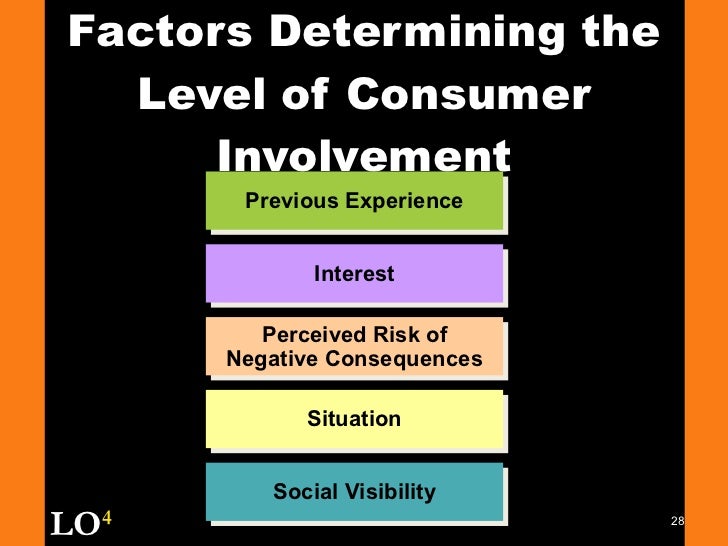
My involvement in this purchase was high for a few reasons.
  1. I did not have much experience buying a phone in the past.
  2. I had a high level of interest in purchasing a phone I would like and that would perform well.
  3. I felt there was a high risk in choosing the wrong phone for my needs.
  4. I knew that the people around me would analyze the decision I had made because a phone is such a visible part of a teenager's life.


Buying my phone was an extensive decision making process because I was unfamiliar with the products offered, it was an expensive product to buy, I don't buy phones frequently, and I had a high level of involvement in the purchase.

The rest of the chapter discusses factors that influence a purchasing decision.

One cultural factor that influenced my purchase was social class. Since I fall within the middle to upper middle class, I was able to purchase a phone with a bit of a higher price, and one that has more extra functions than a phone someone of a lower class might be able to afford. A social factor that influenced my purchase was my family because they were helping to pay for the phone and knew more about what I might want/need. A personal factor that influenced my purchase was my age because taste is often related to age and I bought a phone that most people my age owned at the time. Finally, a psychological factor that influenced my purchase was perception. I found this to be quite important because I perceived the iPhone brand as high quality without knowing as much about it as I could have.


SMART PROJECT

Clearly, marketing is an extremely important aspect of our Smart Project. I think this chapter opened my eyes to just how important the consumer is. Even though we don't actually have to sell our product to anyone, it is important to always consider that what you are making should be something a consumer would want to buy. Understanding how consumers make decisions will greatly influence not only how we make our product, but how we can effectively market it to meet societal needs.

For example if we can determine the level of involvement a consumer might have in our product, we will better understand how they are making the decision to buy the good. By understanding how they make that decision, we can market our product in a way that meets their wants and needs. In saying this, I mean that if a consumer were to have a high level involvement we would know to have extensive information and details backing up our product so they trusted our claims about the product's ability to function properly.


Overall, I truly believe that the consumer's decision making process is crucial to understand in order to produce a successful product. Without this knowledge, a marketer will be unable to evaluate the consumer in a way that is useful to either party.

Until next week!

-Kristen